Georgia Tax Deed Purchasers Are Responsible for Paying Association Dues

Under Georgia law, a tax deed purchaser is obligated to pay homeowners’ association assessments that come due after the tax sale. See Croft v. Fairfield Plantation Property Owners Assn., 276 Ga. App. 311, 314 (2005). This includes the period before the purchaser can foreclose on the right of redemption. Georgia courts have held that a tax deed purchaser acquires sufficient title to trigger automatic membership in the association. The rationale is that assessments and fees paid to a homeowners’ associations benefit a tax deed purchaser.

The good news for tax deed holders is that Georgia courts allow tax deed holders to include condominium association assessments paid as part of the redemption price. Harvest Assets, LLC v. Northlake Manor Condo. Assn., 340 Ga. App. 237 (2017).

Malicious Prosecution, Wrongful Arrest, and Infliction of Emotional Harm

It goes without saying that being arrested and prosecuted for something you didn’t do is a nightmare. In Georgia, if this happens to you, you have options for holding the responsible parties accountable. To win such a claim, it must be shown that (1) you were prosecuted for a criminal offense, (2) there was no probable cause for the prosecution, (3) the prosecution was instigated with malice, (4) the prosecution was under a valid warrant, (5) the charges were dismissed, and (6) you were damaged.

Whether you prosecuted for a crime under a valid warrant, whether the charges were dismissed, and whether you were damaged are straightforward factual issues. The more difficult issues to overcome are probable cause and malice.

Probable cause and malice exist when the information and facts provided to the police, which caused the charges to be brought, were lies or exaggerations. In other words, there is no probable cause when the complaining party knew the facts provided to the police were false or were not a fair, full, and complete statement of the facts.

A related claim is intentional infliction of emotional harm. This requires that the defendant’s conduct be (1) intentional or reckless, (2) extreme and outrageous, (3) the emotional distress was caused by the wrongful conduct, and (4) the emotional distress was severe. Like malicious prosecution, the key is whether the complaining party’s dishonesty  caused the charges to be brought against you. If so, a jury determines whether the conduct was outrageous enough to support a claim for intentional infliction of emotional distress.

If you’ve be wrongly arrested, please call us to discuss how we can help you hold the responsible parties accountable.

Georgia Tax Deeds: Excess Tax-Sale Funds and Super Liens

There was an important shift in Georgia tax deed law last year. The Georgia Supreme Court, in DLT List, LLC vs. M7even, 301 Ga. 131 (2017), decided that a party who redeems a tax deed is not automatically first in line to receive excess tax-sale funds following a tax sale.

The facts of DLT List are straightforward: a property was auctioned at a tax sale and sold for $110,000. The delinquent taxes were $5,000, so there were $105,000 in excess tax-sale funds. The delinquent taxpayer applied to the tax commissioner to receive the excess funds–there were no other claims to the funds. Several months later, a third-party, who held a lien against another property owned by the delinquent taxpayer, redeemed. The redeeming party applied for the excess tax-sale funds. The question became who was entitled to the excess tax-sale proceeds.

Under existing law in Georgia, a redeeming party, simply by virtue of redeeming, is entitled to first position against excess tax-sale funds. This arose out of an often-cited case, National Tax Funding vs. Harpagon, 277 Ga. 41 (2003), which involved competing lien holders in the context of a tax sale. Harpagon held that following a tax sale, a competing lien holder had two choices: (1) claim the excess tax-sale funds, or (2) redeem the property. Importantly, if a competing lien holder chose to redeem, the redemption converted the competing lien holder’s claim into a first-position lien against the property. This is known as a “super lien” and allows a redeeming party to leapfrog over higher priority creditors. A super lien has many benefits for tax sale investors.

Redeeming parties, relying on the super lien language in Harpagon, began claiming their super lien status not only gave them a first-position lien against the property, but also entitled them to the excess tax-sale funds following redemption. These claims were affirmed by the courts in cases like Wester v. United Capital Financial of Atlanta, LLC, 282 Ga. App. 392 (2006).

Fast forward to 2017.  In DLT List, LLC vs. M7even, the Georgia Supreme Court revisited the issue of excess tax-sale funds and found that super liens attach only to real estate, not to personal property. Therefore, because excess tax-sale funds are personal property, super liens don’t attach to excess tax-sale funds. Thus, redeeming parties aren’t entitled to any preference with regard to excess tax-sale funds. By so deciding, the Supreme Court distinguished Harpagon and overruled cases like Wester.

While this ruling isn’t likely to slow down the tax deed business in Georgia, as a real estate investor, it’s something to be aware of.

Bankruptcy: repeat filings

A question we get frequently, especially after a debtor files a second or third bankruptcy as a delay strategy, is just how many times can a debtor get away with filing for bankruptcy? We refer to these folks, not so affectionately, as “serial filers.” While not perfect, there are some restrictions for debtors filing multiple bankruptcies:

180 days: A debtor can’t file a second bankruptcy case for 180 days if the debtor’s case was dismissed (i.e., the bankruptcy wasn’t completed) for the following reasons: (1) by the court for willful failure of the debtor to abide by orders of the court, or to appear before the court in proper prosecution of the case; or (2) the debtor requested and obtained the voluntary dismissal of the case following the filing of a request for relief from the automatic stay.

Two bankruptcies in one year: When a debtor files a second bankruptcy within one year of the dismissal of the first case, the automatic stay expires 30 days after filing (11 U.S.C. § 362(c)(3)). There’s one exception, which is if the debtor can prove to the court that the second case was filed in good faith (meaning the debtor didn’t file repeatedly to delay collection by a creditor), the court has discretion to extend the automatic stay.

Three bankruptcies in one year: When a debtor files a third bankruptcy within one year of the dismissal of the first case, the automatic stay doesn’t take effect at all upon the third filing (11 U.S.C. § 362(c)(4)).

After successful completion of a bankruptcy (i.e., a discharge): For a Chapter 7 bankruptcy, a debtor is not eligible for a discharge if the debtor received a discharge in another Chapter 7 filed within the prior eight years, or in a Chapter 13 case filed in the prior six years (unless the prior Chapter 13 payment plan either paid 100% of the unsecured claims or paid 70% of the unsecured claims). For a Chapter 13 bankruptcy, a debtor is not eligible for a discharge if the debtor received a discharge in another Chapter 13 case filed in the prior two years, or in a Chapter 7 case filed in the prior four years.

Miscellaneous note: The one-year period for either termination or non-application of the stay begins to run from the date of dismissal of the first case. In a joint case, if only one of the debtors had a prior case dismissed in the year before filing, the automatic stay is affected only as to the debtor with the prior case. Section 362(c) (3) and (4) apply to the acts of a specific debtor rather than joint debtors in the aggregate.

Please call us if you need clarification or have any questions.

Negligence law in Georgia

What is negligence law? At the risk of sounding overdramatic, at Gomez & Golomb LLC, we believe negligence law is similar to the golden rule, which is “do unto others as you would have them do unto you.” Here is why.

Long ago, the first laws developed to discourage citizens from intentionally harming each other. Under this system, when someone intentionally harms another, the state prosecutes the responsible person. If found guilty, the state puts the person in jail.

But what about when someone unintentionally harms another? Clearly, it would be unfair to put someone in jail for conduct that lacked intent, but, at the same time, it would also be unfair to the injured person if there were no consequences? As a middle ground, we created a set of rules known as negligence law in which a negligent party isn’t prosecuted or jailed for wrongdoing, but is liable for the monetary damages caused to the harmed party. In other words, as we go about our daily business in our communities, we are obligated to act in a manner consistent with that of an ordinarily prudent and reasonable person. Georgia law confirms this principle. See O.C.G.A. § 51-1-2.

The personal injury cases we handle at Gomez & Golomb LLC all involve negligence. This means the responsible parties harmed our clients but did so without any intent. Examples of cases we’ve worked on are drivers who didn’t pay close enough attention to the road, manufacturers who design products without attention to safety, or doctors who provide medical treatment that isn’t as good as it should be.  None of these parties woke up with up plans to harm to anyone, but, for various reasons, each acted in a way that a careful, responsible, and reasonable person would not.

In our view, our society is better off when someone who intentionally harms another is put in jail and someone who unintentionally harms another is responsible for paying for the damages. While not everyone agrees with this system, and there is no doubt abuse, the alternative is a society without incentive to treat each other as each of us would like to be treated (the golden rule).

At Gomez & Golomb LLC, we see our job as making sure our clients are fairly compensated for legitimate injuries sustained because another person or entity failed to act responsibly.

Venue in a Trucking Case

In a recent dispute over where a wrongful death lawsuit should be tried, the plaintiff made the winning argument against a commercial trucking company. Natasha Blakemore as Mother of Natroya Hulbert v. Dirt Movers, Inc. et al., A17A1540 (January 11, 2018). The plaintiff argued that the case should be tried in the county where the injury took place, while the trucking company argued it had the right to remove the case to the county where its office was located.

The two statutes at issue were O.C.G.A. §§ 40-1-117(b) and 14-2-510(b)(4). O.C.G.A. § 40-1-117(b) is part of the Georgia Motor Carrier Act, which are the statutes that govern commercial motor carriers. That statute says an injured party who sues a motor carrier can bring the case in the county where the injury occurred regardless of where the motor carrier is located. In contrast, O.C.G.A. § 14-2-510(b)(5), which governs corporations, says that, regardless of where the injuries occurred, a corporation is entitled to have the case adjudicated in the county where it maintains its principal place of business.

Here, Dirt Movers, Inc. argued that O.C.G.A. § 14-2-510(b)(5) should apply even if venue was proper under O.C.G.A. § 40-1-117(b). The Court of Appeals disagreed. Holding that if venue was proper under both O.C.G.A. §§ 40-1-117(b) and 14-2-510(b)(4), which was true here, the plaintiff was entitled to bring her lawsuit in the county where the injuries occurred.

Nice try by the trucking company, but the case will go forward in the county where the injuries occurred.

Interesting Homeowners’ Association Dispute

For Georgia real estate litigation nerds, a recent case issued by the Georgia Court of Appeals provides interesting reading. The case, Great Water Lanier, LLC v. Summer Crest at Four Seasons on Lanier Homeowners Association, Inc., A17A1810 (January 2, 2018), involves a convoluted dispute between an investor and a homeowners’ association (HOA). At issue were whether a property was subject to an HOA. The owner of the property asked a court in Hall County to find that the parcel was not subject to the HOA, while the HOA requested the opposite and asked that the property owner pay HOA dues.

The Court of Appeals recited well-settled Georgia law that a person that purchases property is bound by terms in the deed that conveys the property (whether the buyer likes it or not).

The warranty deed in question referred to the HOA, but did so in an arguably ambiguous way. In addition, there were documents signed by the parties that showed the property was not intended to be a part of the HOA. After applying the rules of contract construction to the warranty deed, the Court of Appeals determined the language was not ambiguous, and therefore the language referencing the HOA in the warranty deed controlled over any other documents.

The takeaway is to carefully examine the warranty deed and all other documents when purchasing property.

Medical Malpractice Affidavits

Sworn affidavit from another doctor required in Georgia

To make sure a lawsuit against a doctor has merit, an injured party must provide an affidavit from an impartial doctor (i.e., an expert doctor) confirming the alleged malpractice of the treating doctor.  Georgia courts have stated that the purpose of this requirement is to “reduce the number of frivolous malpractice suits being filed.” Oller v. Rockdale Hosp., A17A1208 (decided August 14, 2017). From an injured party’s perspective, meeting this requirement isn’t easy. First, getting a doctor to review a case is very expensive. Second, this process requires a doctor to stand in judgment of another doctor, which understandably isn’t something most doctors want to do.

If an expert doctor reviews the facts and medical records, and agrees to sign a malpractice affidavit, the story isn’t over. The affidavit has to be carefully drafted because the courts have dismissed a number of medical malpractice claims due to inadequate affidavits. To overcome a challenge to a medical malpractice affidavit, the expert doctor must allege the following:

  • that the treating doctor failed to satisfy the standard of care for doctors treating a patient under similar conditions and like surrounding circumstances; and
  • that the expert doctor has knowledge and experience in the practice or speciality that is relevant to the acts or omissions alleged against the treating doctor (importantly, a medical doctor does not have to practice in same specialty as defendant medical doctor to be qualified to submit expert affidavit).

Meeting these requirements is a prerequisite for filing a valid lawsuit against a doctor and is a critical part of recovering damages against a doctor in Georgia. Please call us for a free consultation if you been injured due to the negligence of a doctor–we’ll be happy to review your options and discuss how we can help get your claim resolved.

Attorney’s Fees in Georgia: Part One

Part 1: Contractual Attorney’s Fees

Virtually without fail, one of the first things our clients ask is whether they’ll be able to recover attorney’s fees from the other side. This is a fair question because it seems wrong to have pay an attorney when the other side has acted improperly or has caused the dispute. While not necessarily intuitive, the default rule, with exceptions, is that each side is responsible for their own attorney’s fees. We’re going to discuss some of the statutes and cases contrary to the default rule–these laws allow the winner of a lawsuit to recover reasonable attorney’s fees.

The most clear cut situation in which the winning party can recover attorney’s fees is when parties have signed a contract that provides for the recovery of  attorney’s fees. For example, a typical provision in a contract might say that “the prevailing party is entitled to attorney’s fees incurred to enforce or collect monies due under the contract.” In these situations, a trial court doesn’t have the authority to alter such an arrangement unless it is prohibited by statute, and the winning party is entitled to reasonable attorney’s fees as a matter of law.

Contractual attorney’s fees were discussed by the Georgia Court of Appeals in Summit At Scarborough Homeowners Association, Inc. v. Williams, A17A1289 (decided November, 16, 2017). In that case, the trial court’s decision to deny a homeowner’s association attorney’s fees related to unpaid association dues was reversed because the association documents, which are considered a contract, provided for the collection of attorney’s fees. Thus, in cases where a contract provides for attorney’s fees, the trial court must award attorney’s fees based upon evidence of the reasonable value of the professional services provided by the attorney.

In the next installment, we’ll discuss what happens when there’s no contractual provision for attorney’s fees, but the opposing party has acted in bad faith.

Gomez & Golomb LLC Resolves Traumatic Brain Injury Case Against Textron d/b/a E-Z-GO

Confidential Settlement with Textron, Inc. d/b/a E-Z-GO

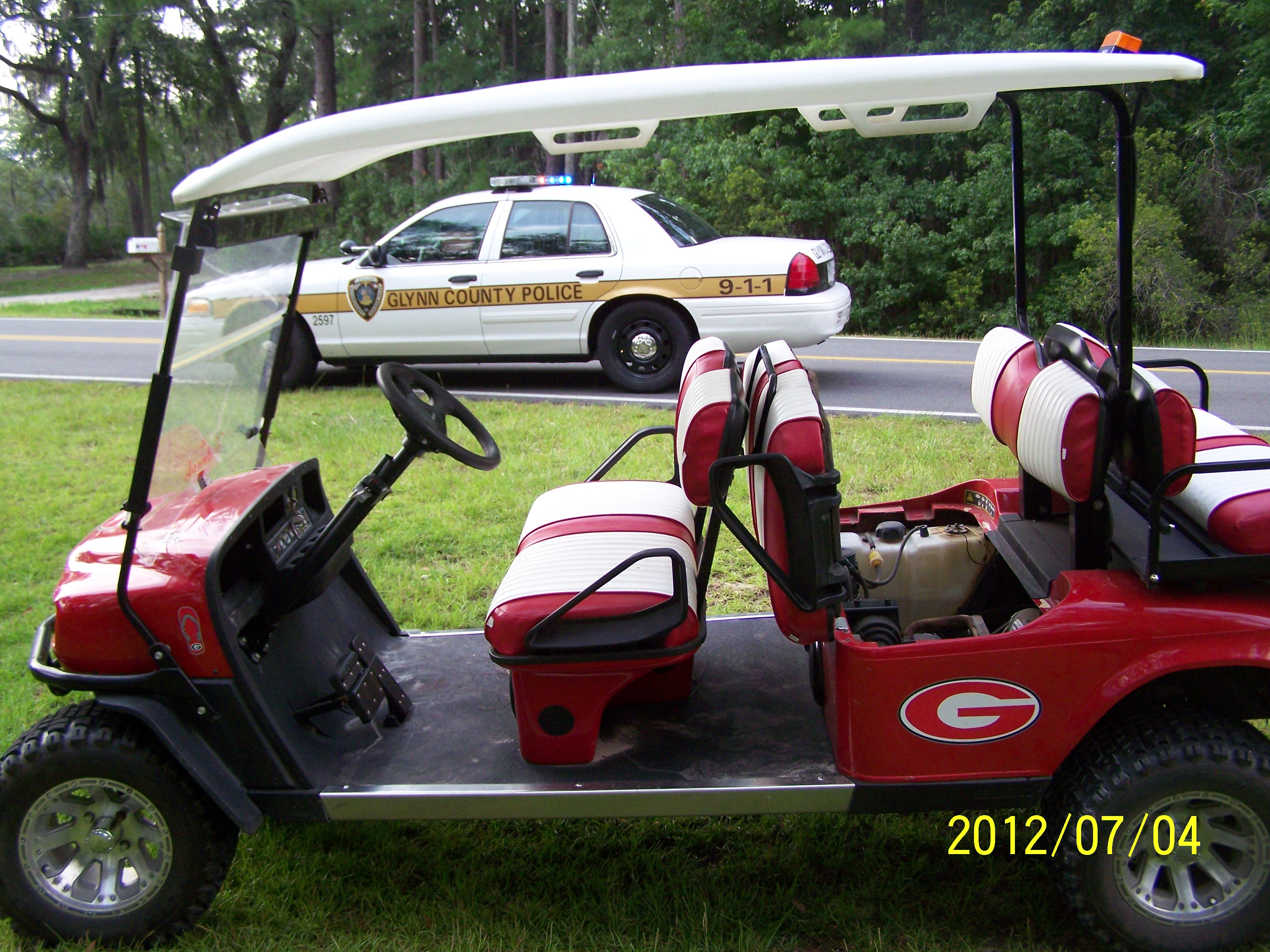
We represent a young man ejected from a golf cart (more accurately a personal transportation vehicle) resulting from a sharp left-hand turn. The photo above is the cart immediately after the incident. This happened in 2012. The ejectment threw the young man head first onto a paved road. The young man spent many months in the hospital with his family. He is a fighter and made a miraculous recovery (he had to relearn how to walk, talk, and eat). Despite his recovery, because of the severity of the impact to his head, he left the hospital with permanent traumatic brain injury (T.B.I.). This is an injury that rarely improves, and, unfortunately, is permanent. Needless to say, brain function is critical to every aspect of life, and this was a devastating injury to our client and his family. 

After hiring experts to investigate the cart and the circumstances of the incident, we determined that the manufacturer of the personal transportation vehicle, Textron, Inc. d/b/a E-Z-GO, had been warned by and well-known engineer in 2007 about passengers being ejected from these types of vehicles because of inadequate passenger-side hip restraints. This engineer was particularly concerned with the rise in injuries to children between the ages of 12-16. Textron, Inc. d/b/a E-Z-GO were also aware of a 2006 peer-reviewed journal article raising these same concerns.

From 2007 until 2012, Textron, Inc. d/b/a E-Z-GO had more than 10 meeting with the engineer who issued the warning, yet failed to make any safety changes to the passenger hip restraint, failed to issue any warnings to existing customers, and failed to recall any of the unsafe vehicles already on the road.

After getting no response from Textron, Inc. d/b/a E-Z-GO, we filed a lawsuit in Fulton County State Court. Textron, Inc. d/b/a E-Z-GO hired a large silk-stocking Atlanta law firm to vigorously defend the case. Textron, Inc. d/b/a E-Z-GO’s main claims were that these vehicles weren’t supposed to be driven on public roads. As the risk of sounding glib, Textron, Inc. d/b/a E-Z-GO’s argument that these vehicles shouldn’t be used on public roads was laughable. Textron, Inc. d/b/a E-Z-GO took the position that because there was a warning on the cart against driving on a public road, then E-Z-GO was responsible for injures on public roads, even if there vehicles were unsafe.

Below is an example of some of the marketing material from E-Z-GO’s website and twitter pages that we were ready to show the jury at trial. This evidence shows that EZGO continuously and aggressively marketed these vehicles to families with children to use in and around their neighborhoods. In fact, anyone that’s lived in a suburban neighborhood has seen families and teenagers using these vehicles to get around on neighborhood roads.

During the next several years, we argued summary judgment motions, Daubert motions, discovery dispute motions, and took depositions of experts in Connecticut, Minnesota, Georgia, and Florida. After almost five years of non-stop work, this past Monday, we finally started a jury trial that was expected to last about 10 days.

In total, close to 30 witnesses were expected to testify.Our side had testimony from two engineers and five doctors, while Textron d/b/a E-Z-GO had testimony from two engineers and a human factors expert.On Monday, we spent all day picking a jury. While we were pleased with the jurors selected, and hopeful both sides would get a fair and impartial judgment based on the evidence presented. Opening arguments took place Tuesday morning until lunch, with each side making compelling arguments for their clients. However, during lunch, the opposing sides approached each other, now having heard each other’s full arguments, to explore settlement. After some deliberation, the case settled for a confidential amount. Although we prepared and hoped to take the case to conclusion, our client was very happy with the result and the settlement was truly in his best interest. 

To be clear, we have not and will never advocate against the use of these types of vehicles. They serve an important function in many communities and are flat out fun. However, our profound hope is that Textron d/b/a E-Z-GO will carefully examine the passenger restraint systems on all its vehicles, current and past, and that it will commit itself to designing and manufacturing safe golf carts and passenger vehicles for typical use, which is often by teenagers on public, neighborhood roads. We also implore Textron d/b/a E-Z-GO to consider recalling any unsafe vehicles currently on the roads with unsafe passenger restraint systems.

Click here to see to an article from Courtroom View Network summarizing the case.