

Wrongful Death in Georgia – Who Makes the Claim

Wrongful Death in Georgia – Who Makes the Claim

If your loved one has recently passed, we offer our sincere condolences. Losing a loved one is tragic, but at some point, the living must go on living. This means educating yourself regarding your family’s legal rights in order to make a full recovery on behalf of your loved one.

If your loved one’s death was caused by the negligence of another, who is entitled to make a claim? A claim may include include funeral expenses, medical expenses, pain and suffering before your loved one’s death, and the value of your loved one’s life that has been cut short?

To understand who can make a claim, we must first understand that Georgia law allows two different claims following a wrongful death: one is just referred to as a “wrongful death claim”, and the other is referred to as an “estate claim” or “survival claim”. The same person can bring both claims, but this isn’t necessarily the case.

Wrongful Death Claim

Under Georgia law, this claim belongs to the loved one’s spouse and children. See OCGA § 51-4-2. If the loved one had no spouse or children during their life, the loved one’s parents are entitled to make the claim. See OCGA § 19-7-1. Finally, if no spouse, children, or parents are alive, the court can appoint an administrator or executor to make the claim. See OCGA § 51-4-5. Relatives such as a sibling, uncle, aunt, or grandparent have no right to prosecute the wrongful death case.

We will discuss this in further detail in another blog. However, generally, a wrongful death claim includes recovery for the value of your loved one’s life had he or she not died prematurely.

Estate/Survival Claim

The administrator of your loved one’s estate is the party entitled to make claims for funeral, medical, and other necessary expenses and any claim for pain and suffering before death. OCGA § 51-4-5.

If you have any questions about who can make a wrongful death claim on behalf of your loved one, please call us. We have provided a very general overview, but many details and complications come up when applying these rules in real life.
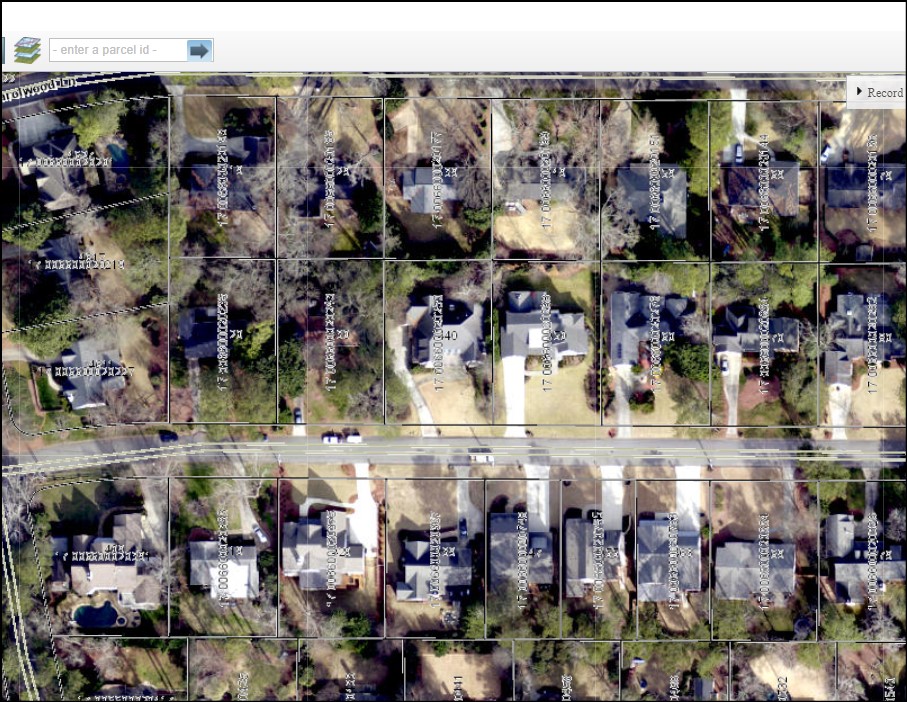

Adverse Possession and Property Disputes Clarified

The Georgia Court of Appeals issued a decision that provides some guidance to the often-unintuitive law known as adverse possession. In Houston v. James, A20A1689 (February 3, 2021), three siblings involved in a property dispute sued each other over a 28-acre parcel owned by their deceased father. One sibling lived on and took care of the 28 acres for more than 20 years. But his father left most of the property to the other two siblings. The sibling left out argued he owned the 28 acres by adverse possession. He claimed he had had publicly, continuously, uninterruptedly, and peaceably possessed the property for more than 20 years. His two siblings disagreed, arguing that the possession was without a “claim of right.”

To be adverse, possession must be for more than 20 years and must be public, continuous, exclusive, uninterrupted, peaceable, accompanied by a claim of right, and not originate in fraud. OCGA § 44-5-161(a). Also, and quite importantly, the party adversely possessing must have a “claim of right” to the property.

A claim of right means the possessor claims the property as his own. Under Georgia law, a claim of right, or adverse possession, will be presumed from the assertion of dominion, particularly where the possessor has made valuable improvements. See Childs v. Sammons, 272 Ga. 737, 739 (2) (534 SE2d 409) (2000). Georgia courts have held that there does not need to be direct evidence of the state of mind of the possessor concerning claim of title; however, there must be evidence of some claim of title in the sense that the possessor claims the property as his own. Walker v. Sapelo Island Heritage Authority, 285 Ga. 194, 674 S.E.2d 925 (2009).

In Houston, the Court of Appeals concluded that a jury must decide whether the sibling claiming the property by adverse possession did so with a claim of right. If you have a property dispute concerning adverse possession, please call us at 404-382-9994 to discuss your options.

In Georgia, how long do you have to tender the statutory redemption amount following a tax sale and how much do you have to pay?

OCGA § 48-4-42 says: “The amount required to be paid for redemption of property from any sale for taxes . . . shall . . . be the amount paid for the property at the tax sale . . . plus a premium of 20 percent of the amount for the first year or fraction of a year which has elapsed between the date of the sale and the date on which the redemption payment is made and 10 percent for each year or fraction of a year thereafter.”

OCGA § 48-4-40 says the tax deed purchaser may terminate the right to redeem one year after the tax sale by sending out notices to any interested parties. The notice regarding the tax deed must include a deadline to redeem.  

It sounds simple enough, but what if the parties can’t agree on an amount? And what if a party redeems within the deadline by mistakenly pays less than the full redemption amount required under the statute? This situation arose in D&D Family Properties, LLC v. Wright, A20A1339 (November 3, 2020).

In Wright, the tax sale took place on July 5, 2017. The Court of Appeals found that the deadline starts running on the date of the tax sale. Thus, the deadline to redeem fell on July 4 of the following year. The redeeming party submitted $7,600 on July 5 ($6,000 for the amount paid at the tax sale plus the 20% premium). It did this thinking the one-year deadline ran on July 5. Or because July 4 was a holiday, the deadline rolled over to the next business day.

The Court of Appeals disagreed. It ruled that by July 5, the redeeming party owed an additional 10%. Thus, the $7,600 was inadequate, and the redeeming party could not redeem.

The takeaway is the Court of Appeals is willing to strictly enforce the statutes regarding tax sales.

Easements by Adverse Possession or Prescription

Georgia law allows a party to obtain a private way, also known as an easement, over the land of another through a process known as prescription (also sometimes called adverse possession). See OCGA Section 49-4-40 et seq. This requires seven years of uninterrupted use through improved lands. To show prescription, however, the party seeking an easement must show (1) uninterrupted use of the alleged private way, (2) that the private way is no more than twenty feet wide, (3) that they have kept the private way in repair, (4) and that the use was public, continuous, exclusive, peaceable, and accompanied by a claim of right. Finally, the use of the alleged easement must be adverse. This means that there cannot be adverse possession if the owner gives permission to use the property.

To obtain an easement over another’s land, the party seeking an easement must prove each of the above elements. All things being equal, the courts will favor the property owner over the party claiming an easement. This makes sense. Obtaining a legal right to go over someone else’s property should not be easy. On the other hand, a property owner has some responsibility to know how his or her property is being used by another and to prevent unauthorized use.

A recent Georgia Court of Appeals case decided this issue. In Wilkes 581 Farms, LLC v. McAvoy, A20A1225 (September 18, 2020), a party claimed an easement over a road belonging to another party. The court ruled against an easement over the road because the property owner had permitted the party claiming the easement to use the road. Thus, the claim was not “adverse.” In other words, if a property owner gives permission, there cannot be adverse possession or prescription.

Secondarily, the court ruled that the party seeking an easement lost because he could not show that the use of the road was exclusive. Instead, the evidence showed that others used the road. Finally, the court ruled that the alleged use was not adverse because the party claiming the easement had not notified the other property owner that he was claiming an ownership interest in the property owner’s property. The court explained that merely using a road for seven years is not enough to create adverse use. Instead, the party claiming an easement must make repairs or take other action to notify the property owner that someone else was claiming an ownership interest in his land.

If you have an easement question or dispute, please call us at 404-382-9994.

Uninsured Motorist Insurance in Georgia: Notice

First and foremost, you should buy uninsured motorist insurance! This type of insurance covers situations in which you are injured by driver who has no insurance or minimal insurance. This is an optional coverage, which everyone should get because it is relatively inexpensive and there are many uninsured and underinsured drivers out there.

If you have (hopefully) purchased uninsured motorist coverage, how quickly do you need to notify your insurance carrier? According to a recent case, as soon as possible. In Hyde v. State Farm, A20A1221 (2020), a negligent driver injured the claimant on August 18, 2016. An attorney notified the claimant’s employer on December 6, 2016, who in turn notified State Farm on December 7, 2016. However, the attorney did not directly notify State Farm until much later.

Because the attorney addressed the December 7, 2016 letter to the employer, the Court of Appeals ruled that State Farm did not receive notice. Moreover, the Court of Appeals ruled that under the State Farm insurance policy, notice is required “as soon as reasonably possible after the injured insured is first examined or treated for the injury.” Here, the notice was not as soon as reasonably possible. Finally, the Court of Appeals ruled that the delay in providing notice was not justified.

At our office, our standard procedure is to notify the at-fault driver’s insurance company and your insurance company as soon as possible. This avoids any chance of losing your right to recover due to late notice. Please call us at 404-382-9991 if you are in a car accident and need an attorney. We will come to you if you do not have a ride.

Were you injured or a crime victim on someone else’s property?

an example of an invitee

If you slip and fall or a rape victim on someone else’s property, the reason why you are on the property matters. Whether you can recover for your injuries often turns on your relationship with the property owner. The law has fancy words to describe the different types of relationships, which we cover below.

The first type of relationship, that of a trespasser, is easy to understand. A trespasser is someone who goes onto someone else’s property without invitation or permission. An example is if someone breaks into your house. If the trespasser gets hurt, you are responsible only if you intentionally tried to hurt the trespasser. This becomes relevant in a landlord-tenant situation. If a lease does not identify a tenant, arguably the tenant is a trespasser and will have a tough claim against the landlord. However, this can be overcome if the landlord knew the tenant was living on the property but took no action.

The next step up is a licensee. This is a person invited onto the property as a social guest but who does not provide a benefit to the owner. A licensee is on the property only for his own convenience. O.C.G.A. § 51-3-2. So, if you invite a friend to your house, your friend is an invitee. If a licensee is injured, the property owner must exercise reasonable care to prevent injury.

Finally, there is what is known as an invitee. An invitee is a person who is invited and provides benefit to the owner. An example is if you go to Publix to buy groceries. You have been invited by the Publix onto the property and are benefiting Publix by buying groceries. With regard to an invitee, a property owner must exercise ordinary care to keep the property safe. This is a higher standard than a licensee. And requires the owner to inspect its property to make sure it is safe for its customers.

If you are injured or are a crime victim on someone else’s property, please call us. Our number is (404) 382-9991.

Georgia Crime Victims Assistance

If you are a crime victim, in addition to suing the person who committed the crime, Georgia offers up to $25,000 in crime victim assistance. This compensation program covers such things as medical bills, funeral expenses, mental health counseling, and loss of income or support. This is a significant program. For example, in 2018, Georgia awarded almost $20 million to 14,246 crime victims in Georgia’s 159 counties.

The Georgia legislature explained the basis for program:

. . . many innocent persons suffer personal physical injury, serious mental or emotional trauma, severe financial hardship, or death as a result of criminal acts or attempted criminal acts. The General Assembly finds and determines that there is a need for assistance for such victims of crimes. Accordingly, it is the General Assembly’s intent that under certain circumstances, aid, care, and assistance be provided by the state for such victims of crimes. O.C.G.A. § 17-15-1.

To get compensation, you must file an application with the Georgia Crime Victims Compensation Program. To qualify, you must be physically injured or witness a violent crime OR suffer serious mental trauma as a result of being threatened or present during a violent crime OR trying to help a crime victim OR you are a parent of someone killed or injured as a result of violent crime OR depended on someone for financial support who was killed during a violent crime OR having been paying bills related to the crime.

The most common crimes eligible for compensation are child molestation, rape, domestic violence, homicide, hit-and-run, serious injury by vehicle, DUI crashes, assault/battery, and robbery.

Please be aware that you must meet some initial guidelines: you must have reported the crime within 72 hours and must file an applications with the Georgia Crime Victims Compensation Program within three years of the crime. These are the general rules but there are exceptions for minors and unusual circumstances.

If you qualify, you will be entitled to recover to $25,000 per victim per incident. The $25,000 includes medical expenses up to $15,000, funeral expenses up to $6,000, counseling expenses up to $3,000, lost wages expenses up to $10,000, and loss of support expenses up to $10,000.

If you are the victim of a crime, please contact Gomez & Golomb 404-382-9994. We offer a free consultation to review and explain your options to get compensated for your injuries.

Sue A Drunk Driver

In Georgia, if a drunk driver causes a car crash, the injured party can sue a drunk driver and recover additional damages known as punitive damages. What are punitive damages? We have written about punitive damages before. These are damages unrelated to the party’s injuries, but, rather, are to punish, penalize, and deter bad conduct. In theory, even if your injuries are minor, you could get a large punitive damages award. Punitive damages are a warning to the drunk defendant and the public that drunk driving is not tolerated. In other words, because drunk driving is a dangerous and preventable act, punitive damages mean you will pay a high price if you are caught driving drunk.

Georgia recently clarified the law regarding punitive damages:

“At about 5:00 p.m. on September 1, 2016, Lakenin Morris was driving his older cousin Keith Stroud’s car when he collided with a car driven by 18-year-old Alonzo Reid, sending Reid to the hospital. Morris had been drinking with Stroud, and Stroud asked Morris to drive his car and gave him the keys even though Morris was obviously drunk and Stroud knew that Morris was drunk, did not have a valid driver’s license, and had a habit of recklessness. Morris later pled guilty to driving under the influence (DUI).” Reid v. Morris et al., S20A0107 (June 29, 2020).

In Reid v. Morris, the issue was whether the injured party could sue a drunk passenger for punitive damages. The passenger argued that since he was not driving the vehicle, punitive damages do not apply. The Georgia Supreme Court disagreed. Although Georgia law seems to suggest that punitive damages apply only to “active” wrongdoers such as a driver, the Supreme Court found this interpretation too narrow. Rather, the Court ruled the important question is whether the intoxication caused the collision. Here, the drunk passenger asked his drunk friend to drive his vehicle. Asking a drunk friend to drive your car is negligent and therefore ultimately caused the collision.

If you need to sue a drunk driver, call us at 404-382-9994 to represent you. We have experience getting damages not only for your pain and suffering but also for punitive damages.

Rape Victim Attorneys

“You save yourself or you remain unsaved.”― Alice Sebold

Unfortunately, rape is all too prevalent in our society. On average, there are there are 433,648 victims (age 12 or older) of rape and sexual assault each year in the United States. That means, every 73 seconds, an American woman is sexually assaulted.

If God forbid, you are a victim of rape and reading this, please (1) contact the police, (2) go to the emergency room, and (3) strongly consider contacting RAINN (Rape, Abuse & Incest National Network), which is the nation’s largest anti-sexual violence organization. RAINN created and operates the National Sexual Assault Hotline. 800.656.HOPE (4673).

Following a rape, victims face financial difficulties caused by medical bills, including emergency and follow-up care. Even worse, the trauma of and following the rape causes victims to experience depression, low-self-esteem, and struggles with family and at work.

Should you contact a lawyer? For many victims, contacting a lawyer and holding the responsible parties to account is part of the recovery process. A rape victim potentially has claims against attacker or rapist and against any business, school, or organization who made the rape possible. For example, if you live in an apartment complex, which failed to secure the property, you are entitled to recover from the owner and management of the apartment complex. Or, if at work, your employer failed to screen a co-worker who had a criminal history, you would have a claim against your employer.

If you have been a rape victim in Georgia, we are deeply sorry. Please call us at 404-382-9994 to discuss your legal options to hold those responsible accountable.  

Georgia easements: Do you know what a bridle path is?

This issue came before the Georgia Court of Appeals. See Doxey v. Crissey, et al, A20A0443 (June 26, 2020). For those of you who do not know (the author included), a bridle path is “a trail for horseback riding.” The American Heritage Dictionary, 5th ed. (2020). See also Merriam-Webster Online Dictionary (2020) (bridle path is “a trail suitable for horseback riding”).

This case involved the enforceability of an easement originally intended as a bridle path, which the owner of the easement wanted to convert to a walking path. The case highlights two important principles related to real estate easements:

(1) To interpret the scope of an easement, the rules of contract construction apply; this is a question of law for the court. The cardinal rule of construction is to ascertain the parties’ intent. Here, the Court of Appeals found that the term “bridle path” has only one meaning, which is a trail for horseback riding. Thus, per the terms of the easement, the only allowed use under the easement was to ride a horse.

(2) As is typical in the law, there is an exception to the above rule. This occurs when use of the easement changes over time, so long as the change is not so substantial as to cause unreasonable damage to the servient estate or unreasonably interfere with its enjoyment. The servient estate is the property that granted or give the easement. This rule applies even without the consent of the servient estate. So, if the easement became a walking trail over time, and the change did not harm the party who granted the easement, then the easement converts to a walking path.

If you have any questions regarding an easement, please call us at 404-382-9991.